

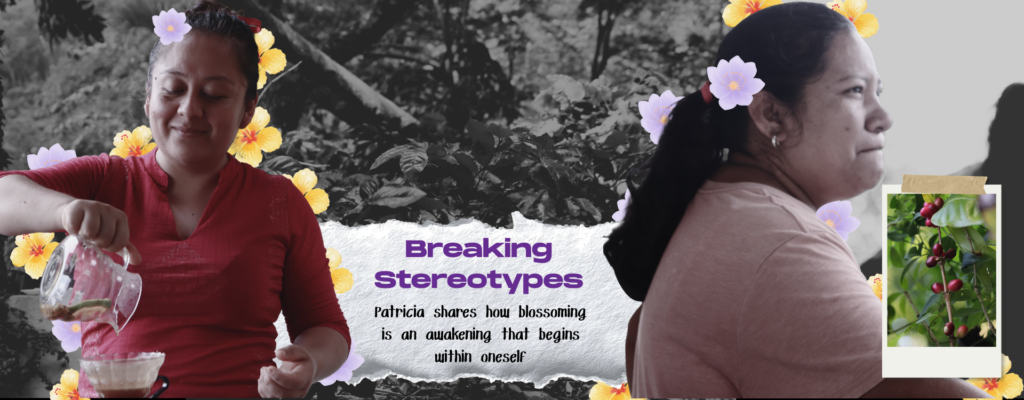
Breaking Stereotypes: Patricia shares how blossoming is an awakening that begins within oneself.
High in the coffee-growing mountains, where every sunrise smells of work and hope, Patricia—surrounded by her fellow women producers—reminds us that cultivating coffee also means cultivating self-confidence. Her story reflects the impact of the Women of Coffee project, which strengthens technical capacities and opens new business opportunities to accompany the quality of coffee produced by women.
As the leader of the Noctámbula brand and representative of 900 fruit-tree growers along the Loxicha–Costa de Oaxaca route in the government program Sembrando Vida, Patricia challenges traditional practices in coffee farming. Together with her mother, she created Noctámbula, a family business dedicated to coffee and agroecological products such as cacao, passion fruit pulp, and soursop.
From the beginning, Noctámbula has been driven by women. Patricia´s mother leads quality control, her cousin is in charge of baking, and she oversees the project’s general management.
“It’s emotional work,” she tells us during the barista training held last November in Pluma Hidalgo, Oaxaca, “to start believing in yourself and breaking the stereotypes that exist about women.”
Women Taking the Lead in the Countryside
Once considered a space reserved for men, the countryside has also changed for women. Today, women are forging paths not only in production and harvesting, but also in decision-making, innovation, and community leadership.
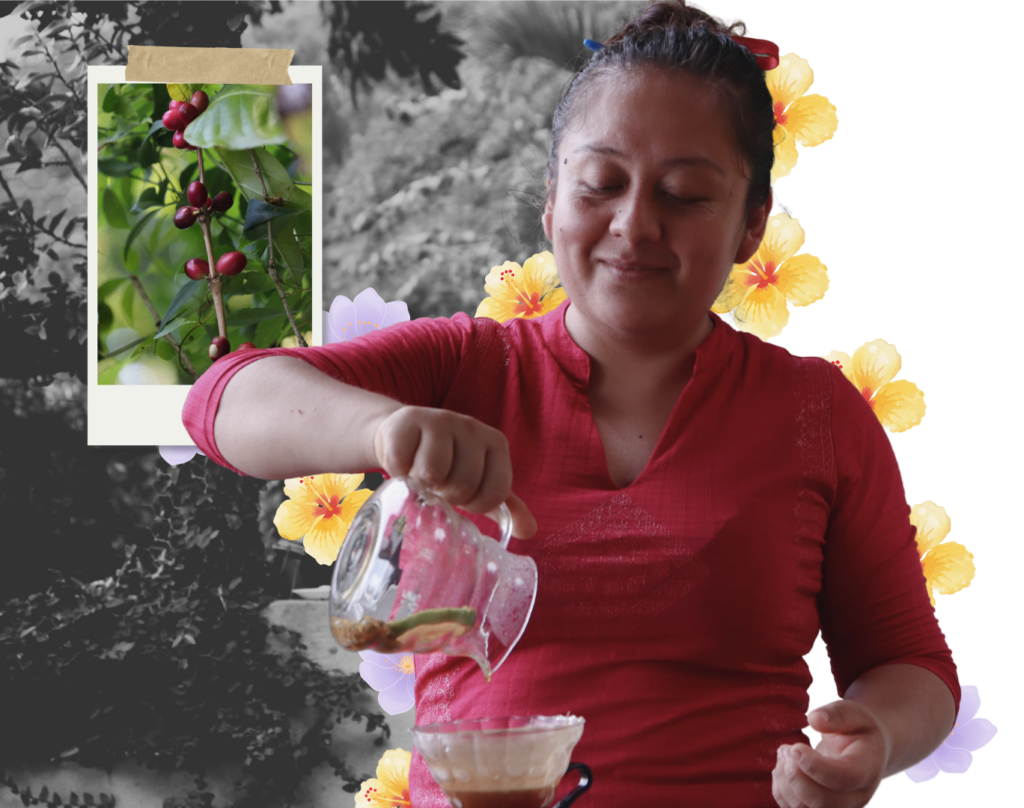
“That’s why my drink is called Unique Sunrise, because something I feel truly sets me apart is that I am unique.” —Patricia
For Patricia, strengthening her knowledge of waste separation, water conservation (through the creation of biofilters), and ongoing training in organic compost production has revealed the profound impact these practices have had on substantially improving her coffee production.
The Somos Cafetaleras project achieves a perfect combination of technical elements and social economy principles. The sustainability workshops, for example, have a direct impact on the value proposition of coffee: by consolidating an agroecological and environmentally friendly product, Patricia can access a better market. This technical-social approach coincides with the historical commitment of women in this region to caring for the land and the environment, turning tradition into a sustainable competitive advantage.
Bringing Quantity Together with Quality
Each woman producer plants an average of 1.5 hectares, yielding approximately 300 kg of coffee (5 quintales). As a result of the Somos Cafetaleras training, specialty coffee production is expected to increase by around 20%.
But even more importantly, their coffee now achieves higher scores (specific figure to be added), earns a fairer price, and becomes more resilient to pests and climate change. They have also learned to organize alongside other women producers: working in coordination, sharing knowledge, and negotiating under better conditions.
Change Comes From Within
Coffee blossoms when you take care of it… and a woman also blossom when believe in what is capable of doing.
“I believe that for anything to truly blossom, it has to start within ourselves… So yes, being a woman influences a lot, but it’s a unique awakening—your own—having to say: I want to be different from the rest, no matter what others may think.” —Patricia
Women of Coffee does more than boost productivity; it is generating a profound transformation in women’s self-esteem, confidence, and leadership throughout the coffee value chain. In every improved plot and every higher-quality cup, you can see a process in which women make decisions, innovate, and recognize themselves as protagonists of their own growth.
Patricia’s story confirms that in the mountains where coffee is born, new forms of autonomy and community well-being are also taking root. Because blossoming begins with believing in oneself—and today Patricia cultivates both: coffee and confidence.
