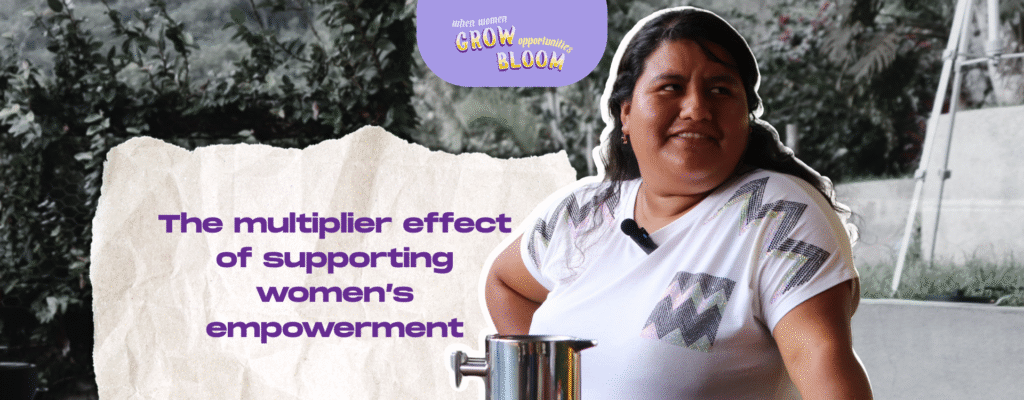
Nilda and Magda show that women’s empowerment generates benefits that extend far beyond themselves, creating a multiplier effect that expands overall well-being and contributes to local development.
Despite the overall reduction of poverty in Mexico, female-headed households remain more vulnerable, facing higher rates of food insecurity and fewer opportunities for formal employment.
Through our projects, SiKanda and Puente a la Salud Comunitaria contribute to change, ensuring that the strength and commitment of women bear fruit in Oaxacan communities with limited access to opportunities.
Improving nutrition means improving health:
Women invest up to 90% of their income in the well-being, health, and nutrition of their families. Beyond covering basic needs, every peso supports children’s school attendance, strengthens household food security, and reinforces local economies.
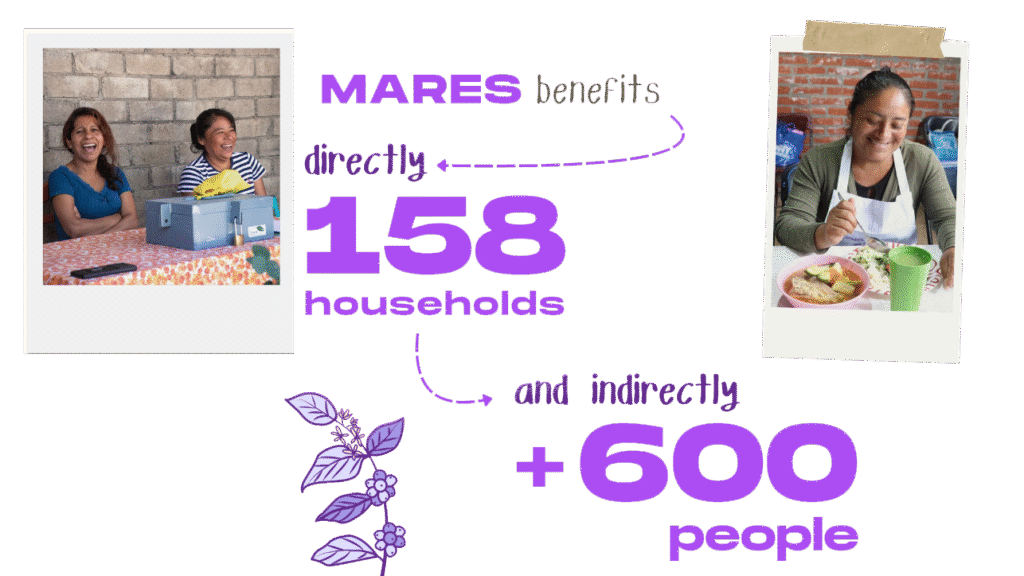
Magda, a participant in the MARES savings group project in the Eastern Zone of Villa de Zaachila, experiences this transformation at home:
“Everything I’ve learned, I’ve put into practice at home with my children, and even with my parents… When they (the instructors) give us a workshop and provide instructions of what we need to do, we follow them with love, and we teach it to our children.”
Magda’s story is just one of many…
Improving education:
Globally, more than 75% of unpaid care work falls on women. They are central within families, caring, educating, and supporting the development of all their members, passing down principles and values to future generations.
When women gain access to knowledge, resources, and leadership opportunities, they break cycles of poverty and promote their children’s education, transforming not only their own future but that of society as a whole.
Children observe and learn from their mothers’ dedication and resilience, shaping their own expectations and future roles.
“My oldest daughter really enjoys cooking… and she tells me, ‘Mom, I’m making a salad, can I cut some lettuce or cilantro?’ She picks from the pots and cooks with it” – Magda, MARES participant
More stable and fair societies:
When women lead, they promote participation at all levels, offering diverse perspectives that lead to more inclusive, people-centered solutions focused on collective well-being.
Through the training in social and solidarity economy offered by SOMOS CAFETALERAS, this year we expect to accompany 150 women coffee producers in the Sierra Sur and Mixteca regions of Oaxaca, belonging to different groups and advancement stages.
Within this group, 23 long-standing participants have already improved the health of their soils, adopted sustainable composting practices, and implemented actions to strengthen their brands.
Nilda, one of the participants from the community of San Agustín Loxicha, explains it this way:
“We have worked a lot on solidarity… when I don’t have a product or, even when someone asks if I have coffee, or if I have it in a certain presentation, I say, ‘Well, I have mine in these presentations… but there is also another person who sells it at such price, and I don’t know her product, but if you’d like, you can ask her,’ trying to get more people involved, not just me selling my things, trying to support others.”
This spirit of collaboration is the foundation of a fairer and more sustainable economy, where women uplift one another and reinvest their success into their communities.
By supporting women like Nilda and Magda, you help cultivate far more than livelihoods, you are sowing resilience, equity, and hope.
They are not only overcoming gender inequalities within this system; they are generating multiplier effects of change.
Invest in women. Watch communities grow.
